UI/UX Case Study | Journaling App
Logney: Journaling App Design
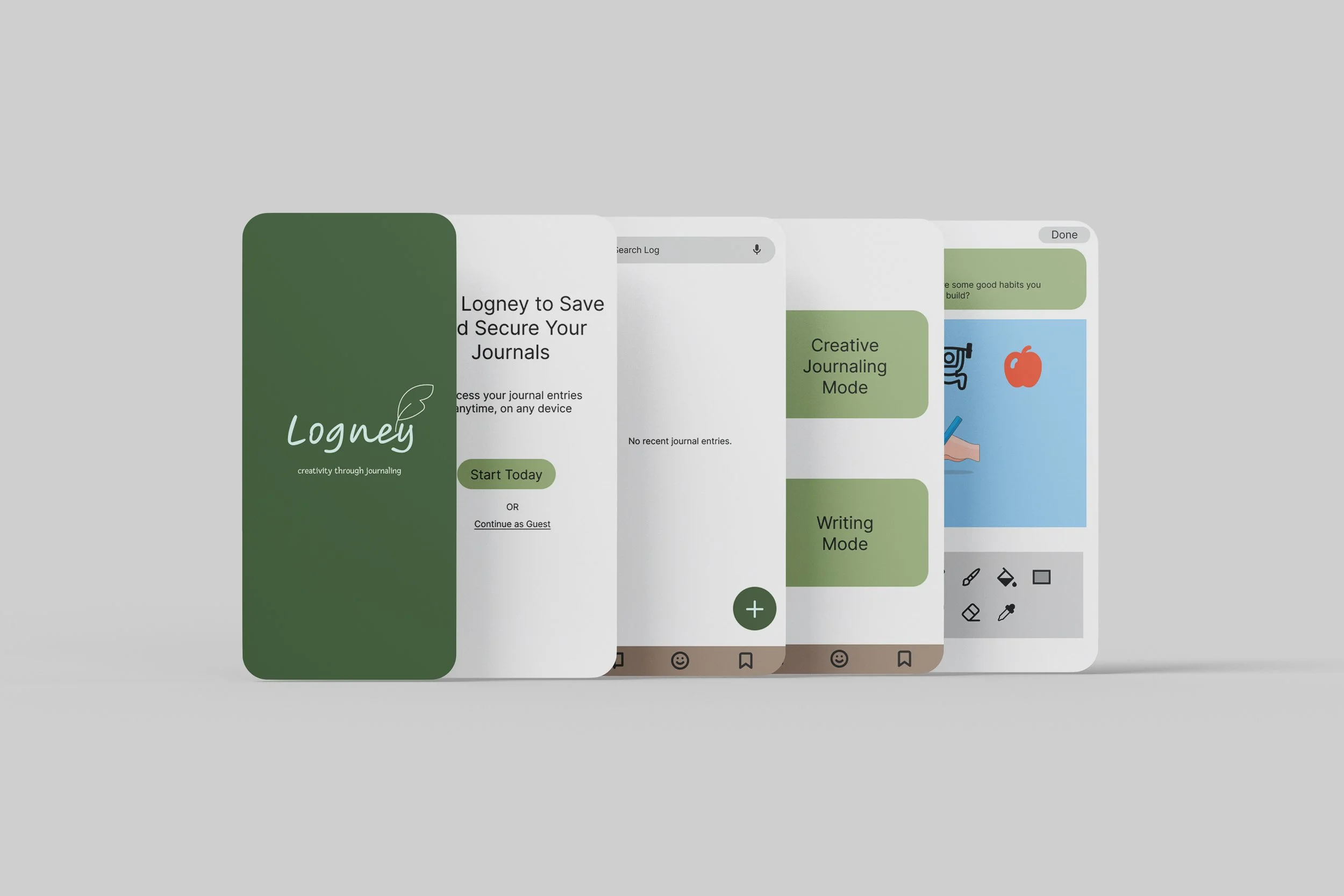
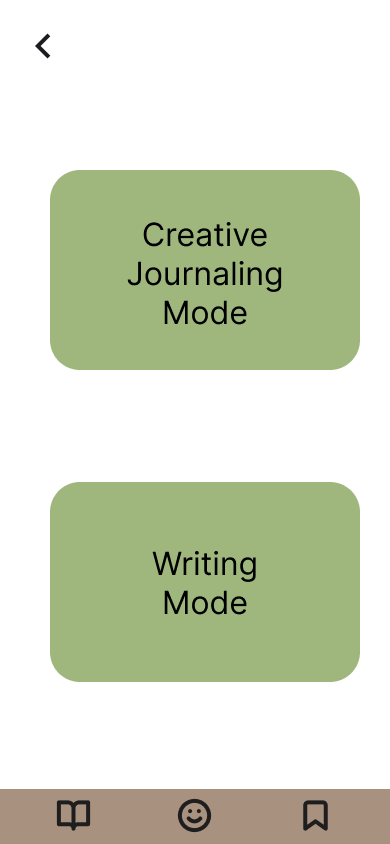
Logney helps people who prefer to use digital journaling as a means to record their activities. It allows users to customize their experience and has different modes (creative journaling or writing mode) based on how they feel like journaling.
Project Overview
This project focuses on designing a journaling app that aims to help users attain a balanced lifestyle with combined interests of art and drawing with health practices such as listening to nature sounds.
Researching, Ideating, DesigningAugust - December 2024
Adobe Illustrator, Figma
RoleTimeframe
Tools
Project Problem
There are many journaling apps that focus on writing, however few allow users to fully customize how they would like to express themselves. I identified a gap in tools that combined creativity journaling with guided mental health practices, such as where users can draw, add images, log emotions, respond to prompts, and more. This project explores a journaling app designed to give users complete control over how they document their thoughts, integrating nature sounds while they log away.
User Research
I analyzed existing journaling apps to understand how digital tools support reflection and creative depression. I studied apps including Reflection and DailyBean, their interface patterns and interaction design.
Through the analysis, I recognized that many journaling apps lean heavily towards either writing or tracking, but rarely combine creative freedom with guidance in the form of prompts. Too many features or complex interfaces can overwhelm users and weaken the intention of journaling. A simplified, user-friendly design allows people to focus on their reflections.
Key insights from research:
Minimalist interfaces reduce distractions
Visual journaling help users track progress over time
Users want freedom to personalize their journaling experience
Too many features can feel overwhelming
I conducted four interviews exploring how individuals process emotions and express themselves creatively. Participants described using drawing, music, writing, and visual journaling in order to understand themselves better and keep track of their feelings. From the interviews, I focused on two features that will be implemented into the app.
Insight: People find it difficult to focus their thoughts when its only writing-based
Opportunity(ies): integrate mood-tracking prompts to make journaling easier and quicker for those who don’t have the time or energy to write long entries
Solutions (feature(s)/functionality(ies): daily prompts or questions to guide users to make journaling less overwhelming
Insight: People find it difficult to focus their thoughts when its only writing-based
Opportunity(ies): integrate mood-tracking prompts to make journaling easier and quicker for those who don’t have the time or energy to write long entries
Solutions (feature(s)/functionality(ies): daily prompts or questions to guide users to make journaling less overwhelming
Project Solution
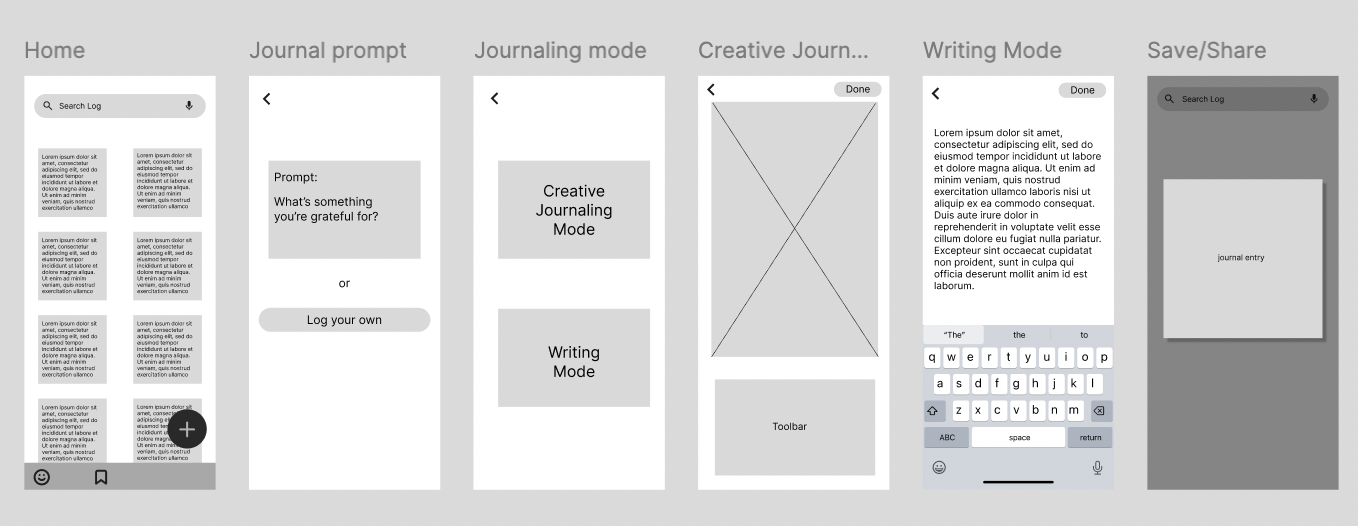
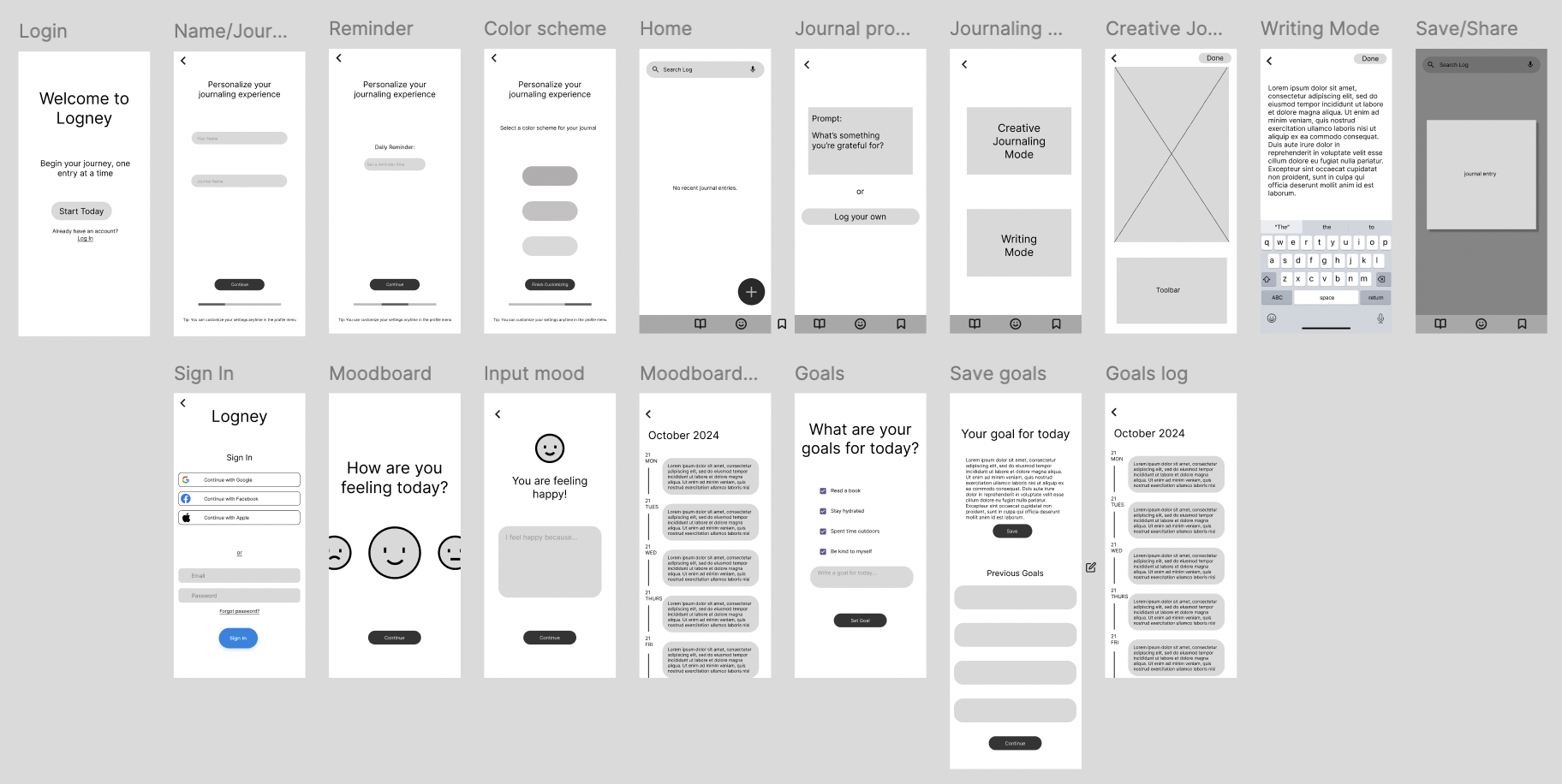
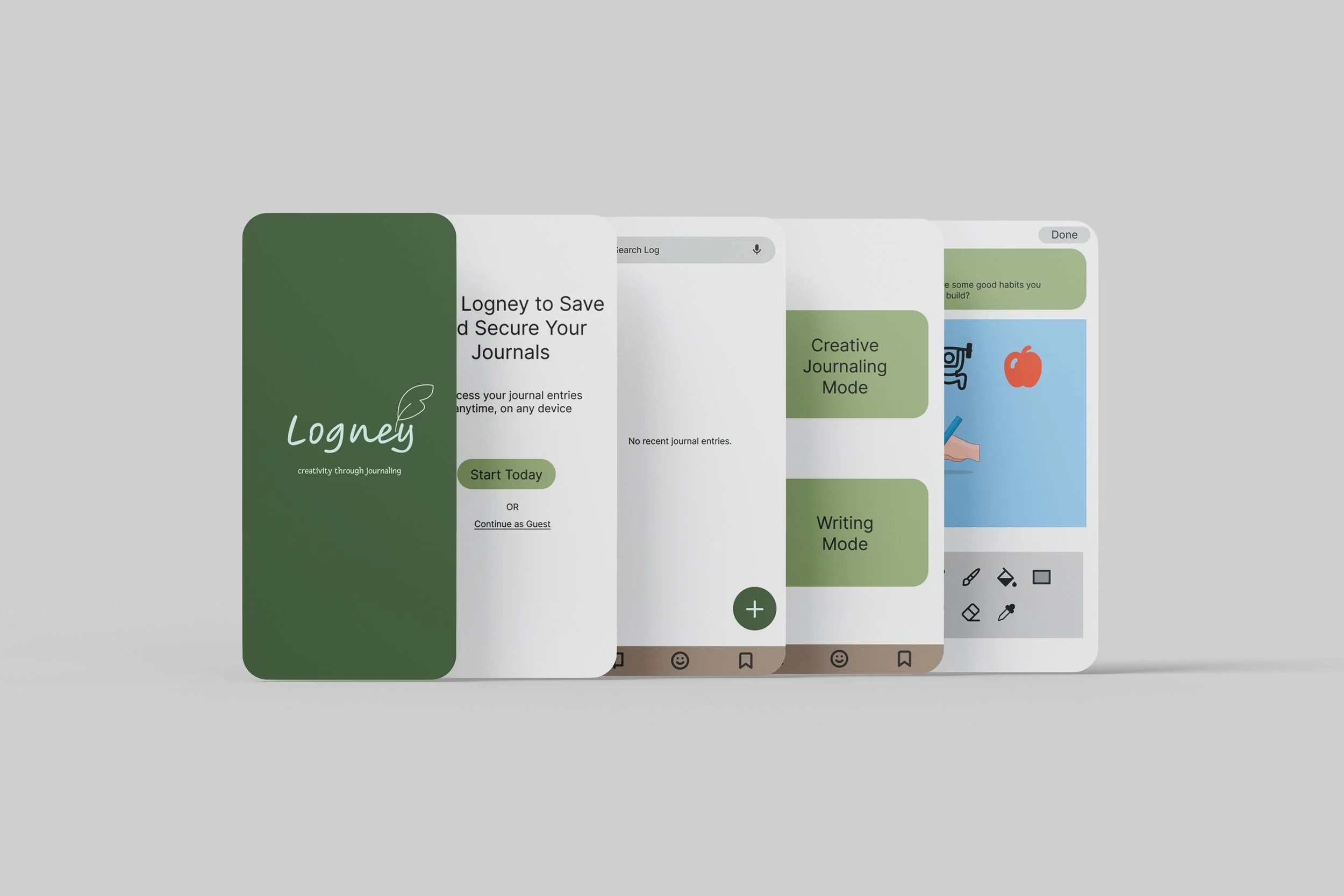
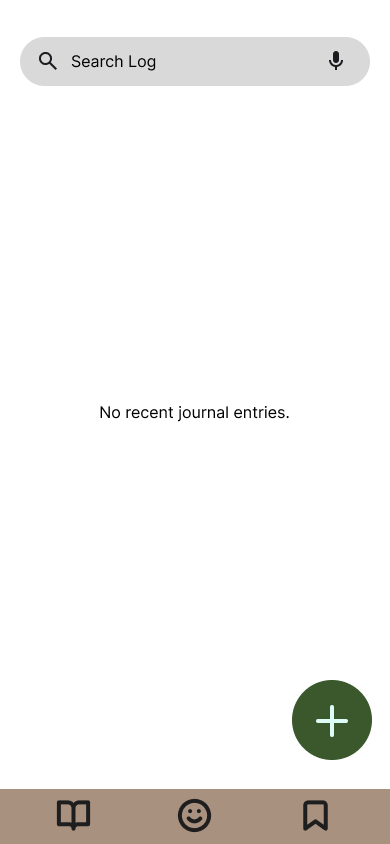
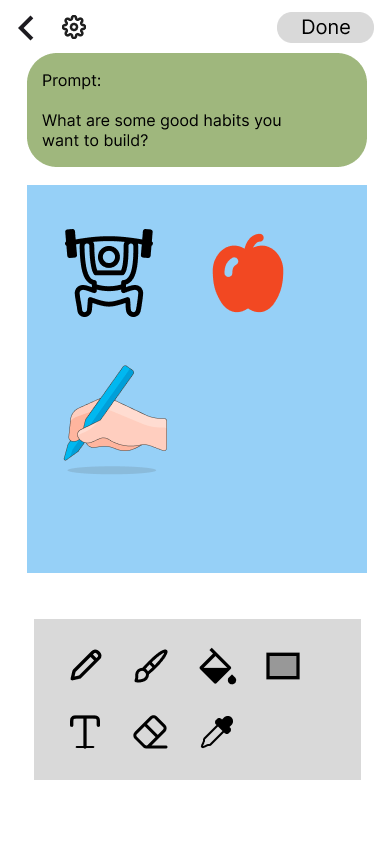
The solution focused on translating the research insights into a journaling experience that balances creativity with wellness. I developed wireframes that integrated feedback from interviews and prioritized a minimalist interface. I introduced flexible tools for drawing, image placement, and written reflection. A dedicated mood-tracking screen flow was designed to help juicers visually log their emotions alongside their journal entries. The mock-ups mapped the overall user flows to ensure the experience remains distraction-free and easy to navigate. The final design emphasizes customization and creative freedom.
Design Process
Main Wireframes
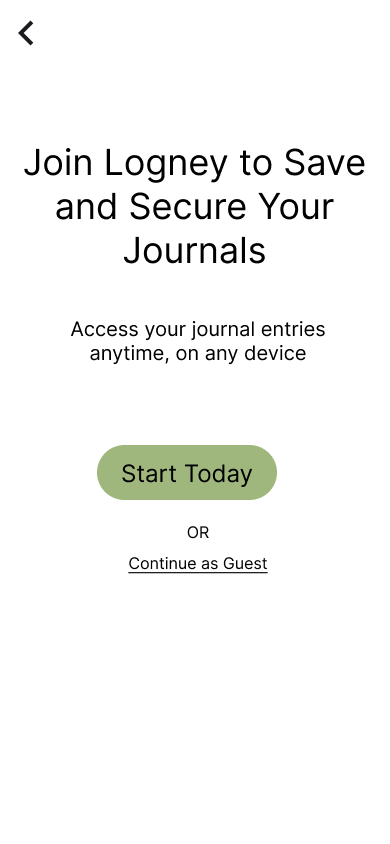
Mockup of Screens
Outcome
This project focused on designing a journaling experience that feels less like a productivity tool and more like a personal diary or canvas. The app encourages consistent journaling habits while supporting self-expression.
This project showed me how thoughtful interaction design can support long-term habits, and not just single-use moments.
Throughout this process, I learned the importance of testing ideas, adapting to challenges and hurdles, and expecting constant iterations.