UI/UX Case Study | Mini-Player & Dynamic Island Interfaces
Turnstile: Improving the subway transfer information
Turnstile helps local New Yorkers with subway train route information and schedules. It allows users to input any stop and find the best route using the NYC subway system.

Project Overview
This project focuses on improving the user experience by designing a trip-following feature that allows subway riders to track a specific train’s journey after it is selected.This feature helps users maintain awareness of the train's progress through a persistent mini-player that remains accessible outside of the app, as well.
Researching, Ideating, Interaction Design, UI DesignMarch - April 2026
Figma
RoleTimeframe
Tools
Project Problem
Subway riders often need to monitor a specific train in order to reach the correct one. However, once users leave a trip screen to explore other areas of the app, it becomes difficult to maintain awareness and keep track of that train's status and arrival information. This project focused on improving how transfer information is presented within and outside the app.
User Research
To understand how persistent tracking experiences are implemented across digital products, I analyzed applications that provide the access to active content while allowing users to navigate elsewhere within or outside of the app that they are using. I studied audio and media applications including: Spotify, Sonos, Apple Podcasts, New York Time Audio.
These apps use the persistent mini-player interfaces that remain visible while users browse other sections of the application.
I also researched Dynamic island experiences across apps including: Flighty, DoorDash, ChatGPT. By examining their compact, minimal, and expanded states, I gained insight into how live information can be shown within the limited screen space.
Key insights from research:
Persistent interfaces allow users to continue monitoring content while navigating outside the app
Information hierarchy is important when designing compact UI elements
Live status indicators are important to assure that information is actively being updated
Compact experiences should only consist of the most important information
Dynamic island interactions require layouts that can be scalable to adapt to the other states
Project Solution
The solution centered on introducing a "Follow Trip" action that switches the train journey sheet into the tracking experience. I first designed a bottom action bar that presents users with a Follow Trip button after viewing the trip details. Once that is tapped, the trip sheet collapses into the mini-player that is positioned above the bottom navigation bar.
The mini-player was designed to provide essential trip information. The layout includes: a train line icon position on the left, the origin stop and train destination displayed in the center, the arrival time and live indicator on the right.
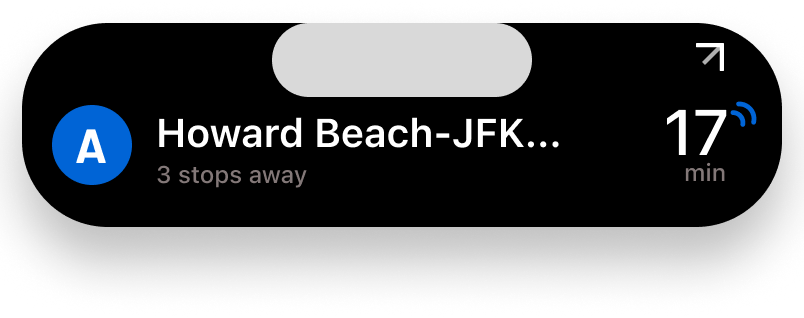
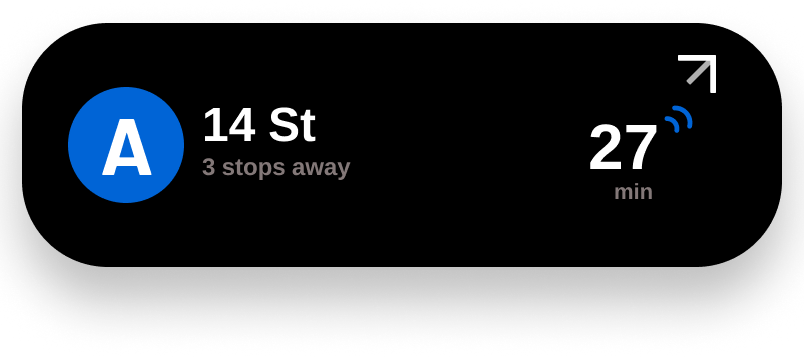
I designed Dynamic Island support for iPhone devices. The Dynamic Island displays the train information in compact, minimal, and expanded states. These states allow the users to monitor the trip progress without having to reopen the app.
Design Process
I began by exploring how users would initiate trip tracking. Several button placements and action bar layouts were tested in order to determine the best method for following a train.
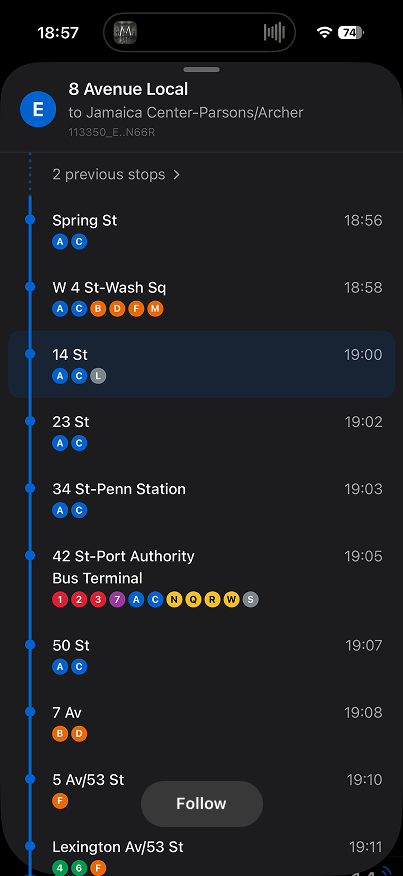
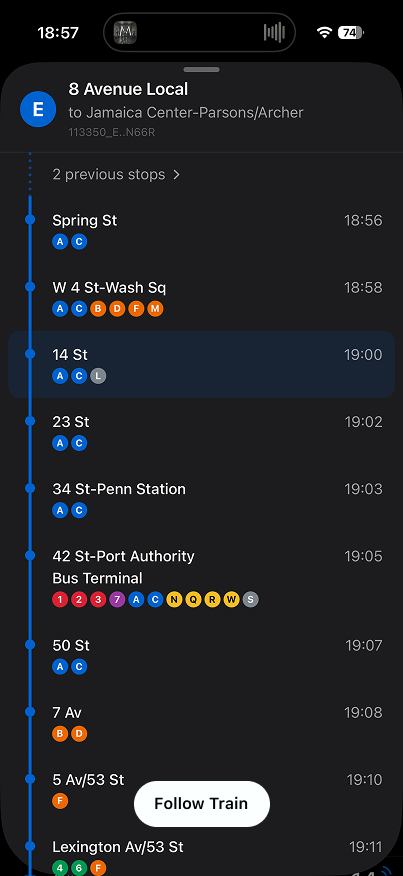
Expanded Islands:
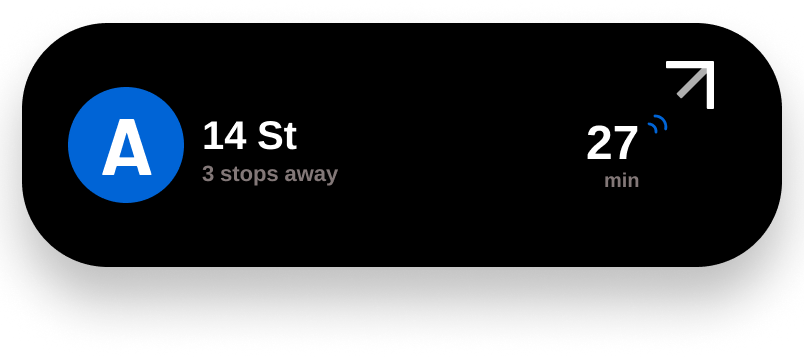
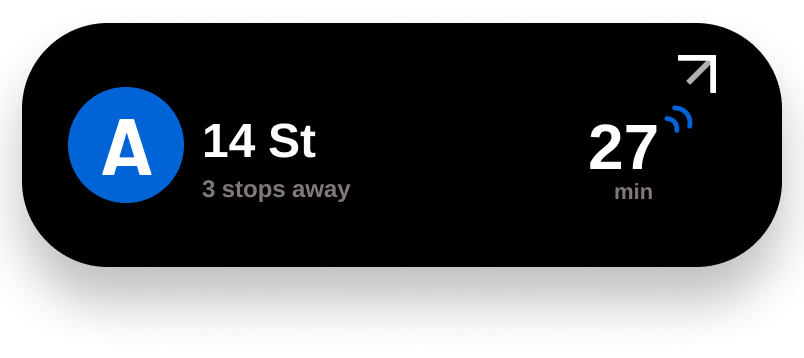
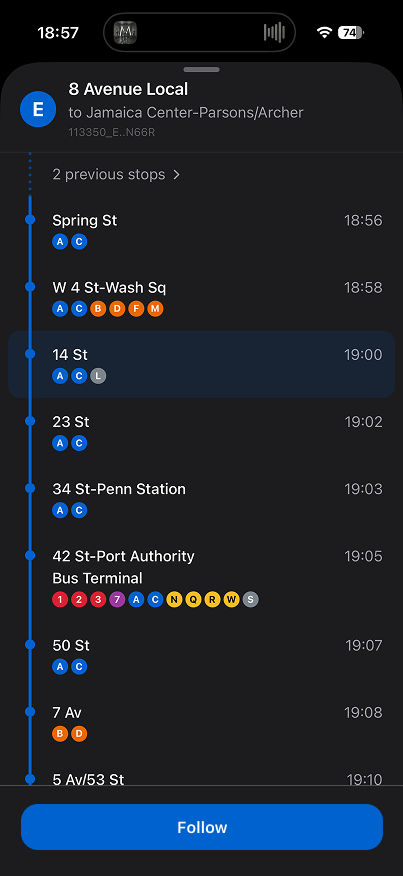
After figuring out the Follow Trip interaction, I explored ways to transition the trip sheet into a compact mini-player. I experimented with different hierarchies, layouts, and versions to determine the most effective arrangement of the trip information.
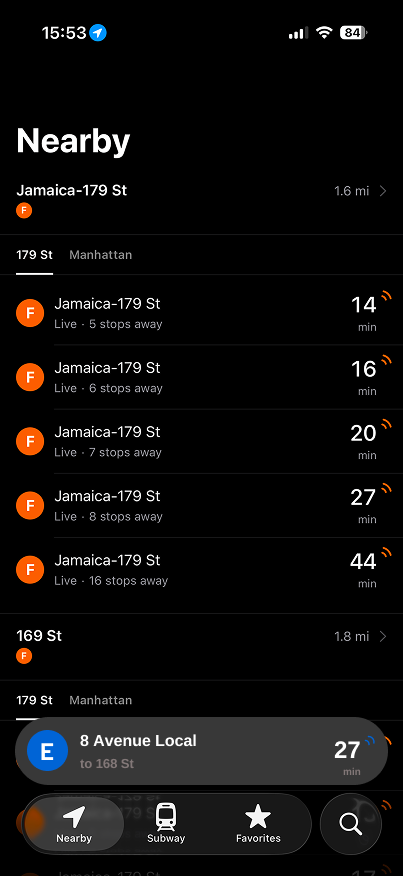
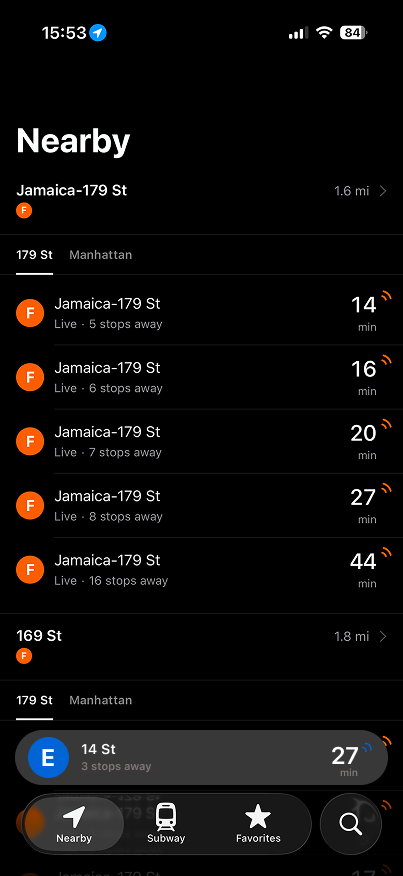
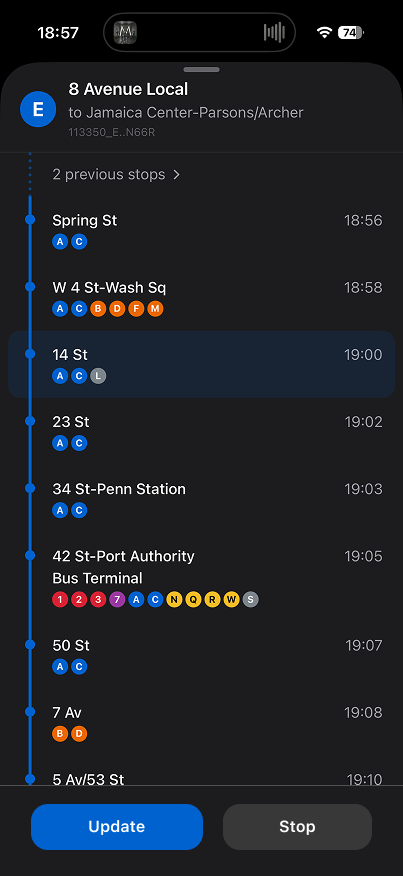
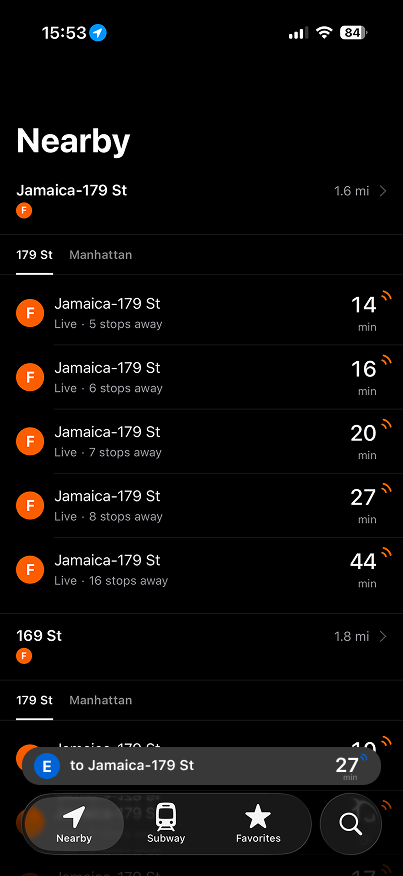
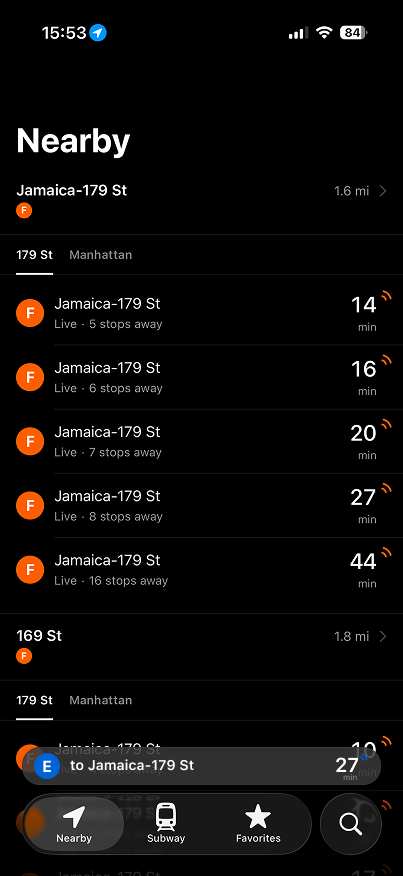
I then designed Dynamic Island experiences that were inspired by Flighty, DoorDash, and ChatGPT's dynamic islands. Each state needed to communicate the most essential information and adapt to the smaller screen space.
Compact Islands:

Minimal Islands:




Outcome
This project explored how features can improve transit tracking without requiring users to visit other screens. Through my research of audio players and live activities, I learned how information hierarchy becomes important as the interfaces become more compact. Designing both the mini-player and Dynamic Island experience challenges me to prioritize the most valuable information. The final solution provides riders the ease of tracking their train.
Throughout this process, I learned the importance of testing ideas, adapting to challenges and hurdles, and expecting constant iterations.